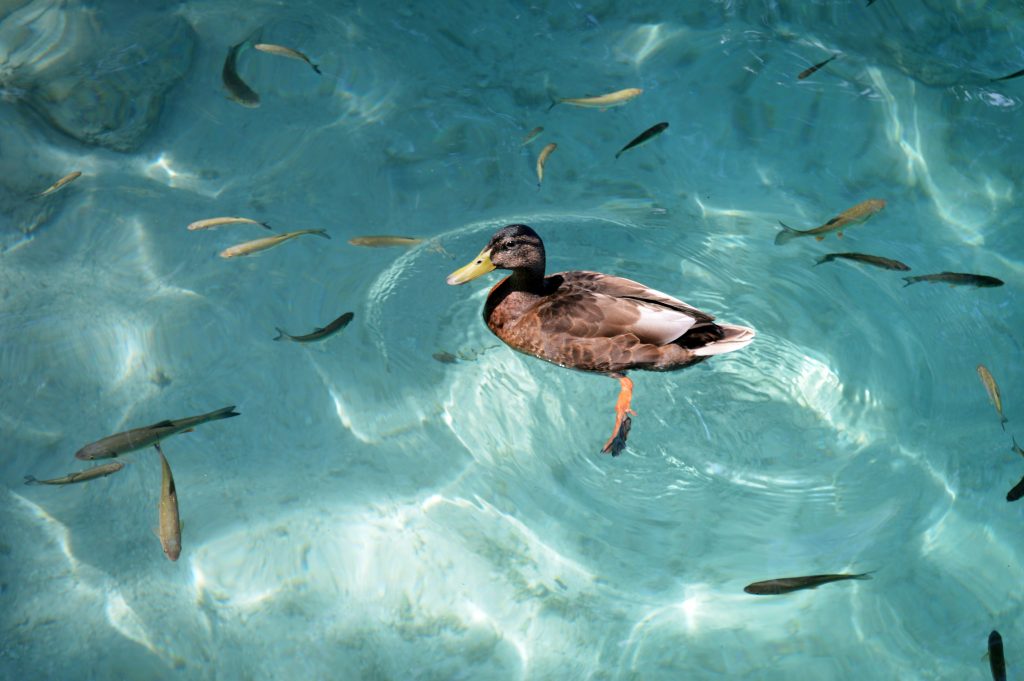
When my duck was swimming I’m surprised she didn’t pass out from being so dizzy going around and around and around… I had so many coping mechanisms it’s almost like being at the Woolies deli and taking a number as to which one I was going to serve first!
That feeling of coping. Like it takes most of your energy just to keep your chin above the waterline. You may be only slightly aware of it as you go about your day to day life. It could be just that niggling feeling whenever you hear of someone else’s stuff, or you meet someone and you/your body has a triggered reaction. That’s your internal pendulum whispering to you that something isn’t quite right within your own world. Everything is energy peeps, including your emotions. You shrug it off and get on with your day… until the next time that feeling pops up again…. And you shrug it off again….
Welcome to the one legged duck. Circling around and around with all of its might, yet never actually getting any further away from the drain (whatever your stuff is). Your duck can take all shapes and sizes – comfort food, excessive drinking, bouncing from one romance to another not finding what you are looking for… the list of coping mechanisms can be as long as your shopping list.
Coping mechanisms are what we create when we’ve had an event/situation/trauma that throws us into overwhelm. Imagine an internal pendulum that sits within, a gentle swinging in a small arc as little things occur in life. This is your internal balancing mechanism. Then a trauma/event/grief occurs and your pendulum gets knocked hard which causes it to swing on a wide arc from one side to the other. You and your emotions are overwhelmed and your beautiful brain does its job (which is to keep you upright and functioning at pretty much all costs) and disconnects you from how you are feeling in your body.
Usually within a month or two post the event, the shock recedes, the feelings flood in and depending on where you are at and the support in your life, healing begins. Except when it doesn’t, (for all sorts of reasons that I’ll touch on in future blogs), particularly if the event/trauma occurred in childhood. That’s where your duck starts swimming. Your system remains in overwhelm and you create coping mechanisms (one of mine was food and overeating) and away we go. Each time we feel the feelings in our body associated with the event/trauma, our neural pathways tell us “Oh we are feeling this, go do that”, and before you know it the entire packet of Tim Tams has been inhaled (was my fav biscuit so eating the whole packet was fine, right?).
I came to understand that these coping mechanisms were my uncomfortable comfort zones. The habits and behaviours I had developed (my beautiful brain doing its job), to either protect me from the unhealed traumas living on in my body (even though they had occurred decades ago), and/or to provide comfort to those parts of me still reeling from the grief – parts of me that I was kinda aware of, but not really – I hope you get my gist here.
Uncomfortable comfort zones can be great and also come at a cost. The cost of your growth and your healing. Whilst we don’t know how many years we have in our life, we do get to decide how we spend those days. If you want to feel better, if you want to retire your uncomfortable comfort zones to the Bahamas, and change the direction of your duck to head for the sunrise instead of the drain, reach out. Just imagine for a moment what it will feel like to wake up to peace and calm inside….
Till the next blog, enjoy your day blossoms.